
How to Prepare for a Tarot Card Reading
First of all, let’s ask the question – what is a tarot card reading?
The tarot deck of cards is a divination tool with disputed origins. Some say it goes back to Ancient Egypt, others back to India, China or Korea. In the early 15th century it became popular in Italy and some say it was likely through maritime trade in Venice and began as a card game.
The deck consists of 78 cards; 28 “Major Arcana” and 56 “Minor Arcana” all based on various archetypes.
The Major Arcana are numbered from zero to 27 and begin with the Fool and end with the World, demonstrating the soul’s journey through life. The Minor Arcana there are suits that represent the elements. Swords – air, wands – fire, cups – water and pentacles – earth.
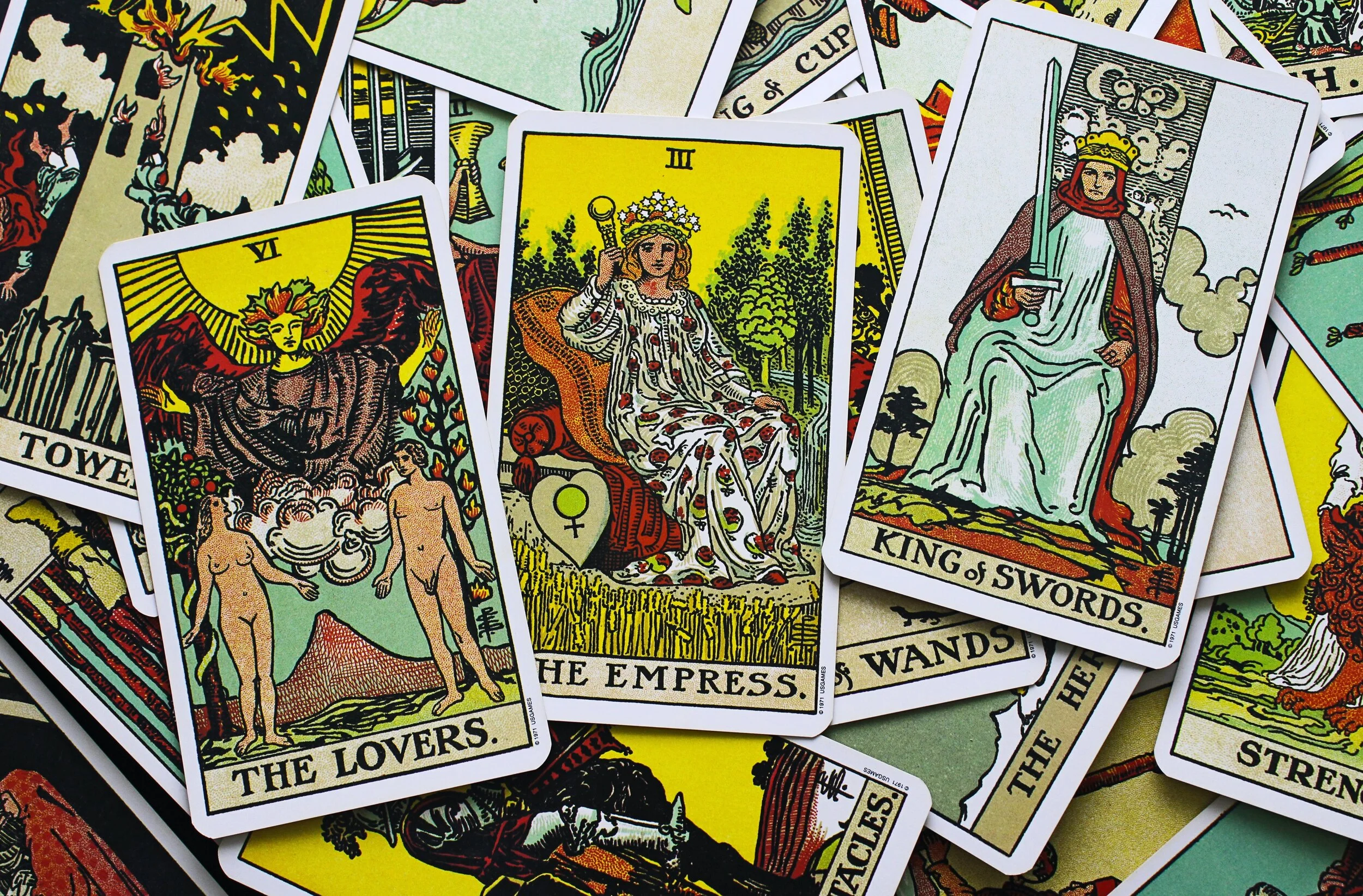
Cards from the very popular Rider Waite deck.
Tarot is an incredibly useful tool for gaining clarity. It can be used in a general way to give yourself an overview of your life (ie using a 12-house astrological tarot spread to see what is going on each of those areas of life). It can be used for a specific question with a specific time-frame (ie “what will be the outcome if I make an offer on this house next week”). It can be used to clear up a misunderstanding you have with someone else; or even address problems you are having in a relationship. It can give you an idea of appropriate timing; it can even help to inspire you to take action. You can do a spread every New Moon on what you should initiate; you can do one every Full Moon to ask what you need to let go of.
Tarot can be used to help make decisions. It can even be used to connect to your personal angels and guides. It can be used to ask what is going on in a relationship, or what your best course of action to take is in a given circumstance. Tarot is infinitely useful!
There are multiple spreads depending on what you are seeking. For an overview, a 12-house spread is best. For specific questions, a Celtic Cross reading. For everyday guidance, I do a daily spread that includes cards for work, home, unexpected events, my role and the outcome.
If you are having a tarot reading, my first piece of advice is to approach the session with an open mind. If you are fearful, then there is less of an open flow of energy from you and your guides to the reader. You need to trust this person who is doing the reading. It can help beforehand to offer a prayer, to clear your mind and to approach the process seriously.
An important piece of advice is also not to ask the same question over and over. If you’ve already been to another reader, or done your own spread on a question, don’t keep re-asking it. Your guides tire of being ignored. If you keep asking the same question, eventually you’ll be told the answer you were wanting to hear instead of the answer you actually need. This leads to problems for you, and then you distrust the divination technique. Hear the hard thing that you might not want to hear; let the truth set you free.
It can help to make a list of questions to take with you, and to be precise with what you are asking and also with your time frame. You cannot ask things like “will I find love?” That type of question is too general. If you ask that question generally the answer might be “YES” because you’re adopting a dog next week. Your reader needs you to be specific in the question you are asking.
You might also ask the reader to record the session; often your mind is blown by what the reader is conveying and you can forget important bits of information. At the very least take a notebook so you can jot things down.
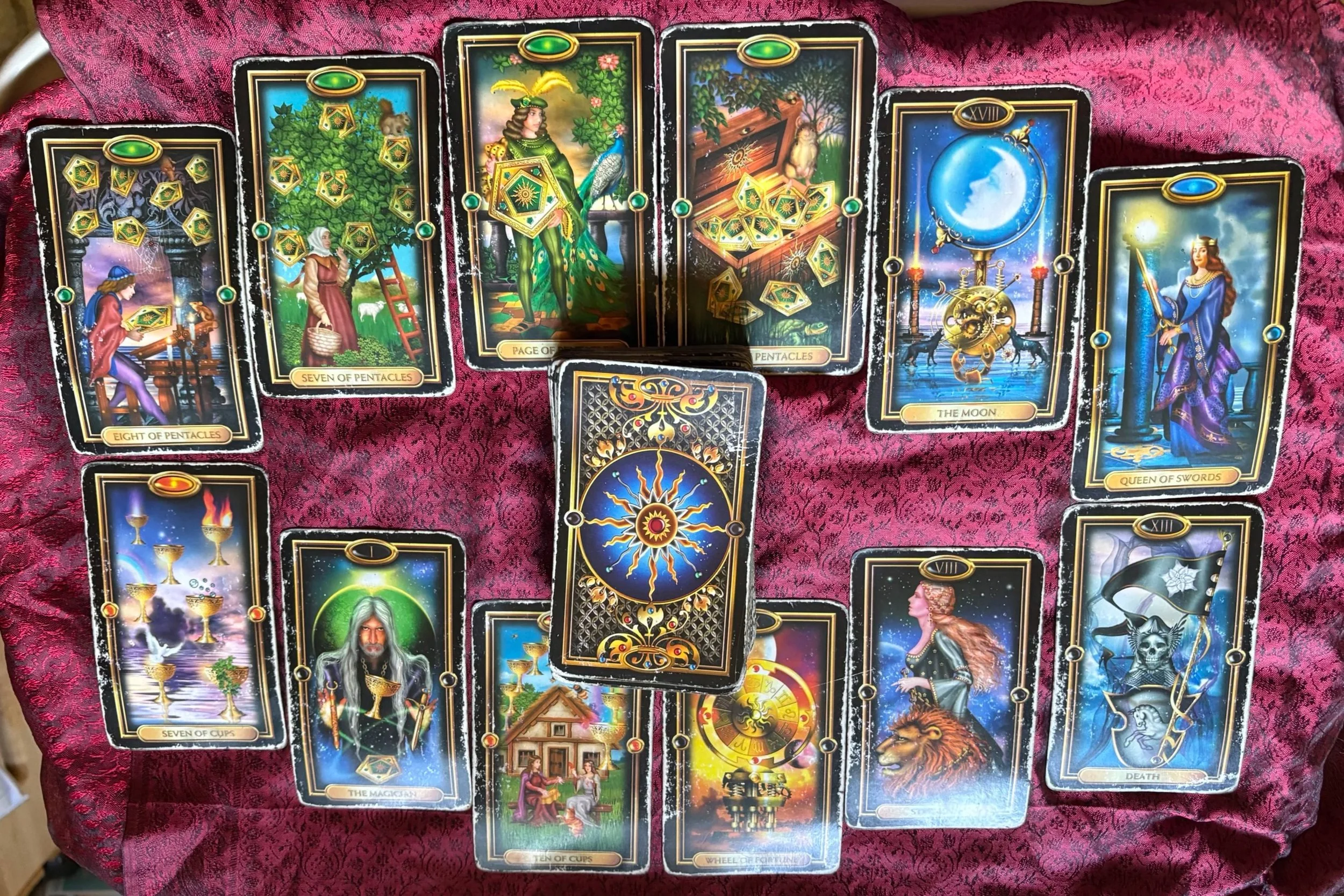
Snapshot of a 12-house tarot reading that relates to your astrology.
Don’t be afraid of the cards or take them too literally. If you get the Death card, it doesn’t mean you are going to die. The cards are speaking to you in symbols — which is the language of your spirit/soul. That said, sometimes the cards will be quite literal; I remember asking a question about allowing an additional person to be added to a group class, and she was a redhead. In my spread was the Empress, which is depicted in the deck that I use as a woman with long red hair.
Don’t be afraid to fill in some more information after the reader gives the initial assessment of the cards; often this can give them more direction and will help you to gain more clarity from the reading.
Remember also; the reader is letting you know how the energy is moving. If you make a conscious change, you typically can change or influence the outcome. It’s all about exercising your free will. Sometimes you are told what you need to hear at that time that will compel you to make different choices. Typically, what you are being told is what will happen if you stay the course.
Finally, arrive on time and finish in the scheduled time frame. Your reader is a professional and their time is important and should be respected.
Enjoy my free online tarot course as a gift and introduction to my teaching. I wish you a wonderful tarot adventure, whether reading for yourself or reaching out for a reading.
Shanti,
Jill